Why Most Time Management Systems Make You Busier
Have You Tried Every Productivity Tool, Yet Still Feel Overwhelmed?
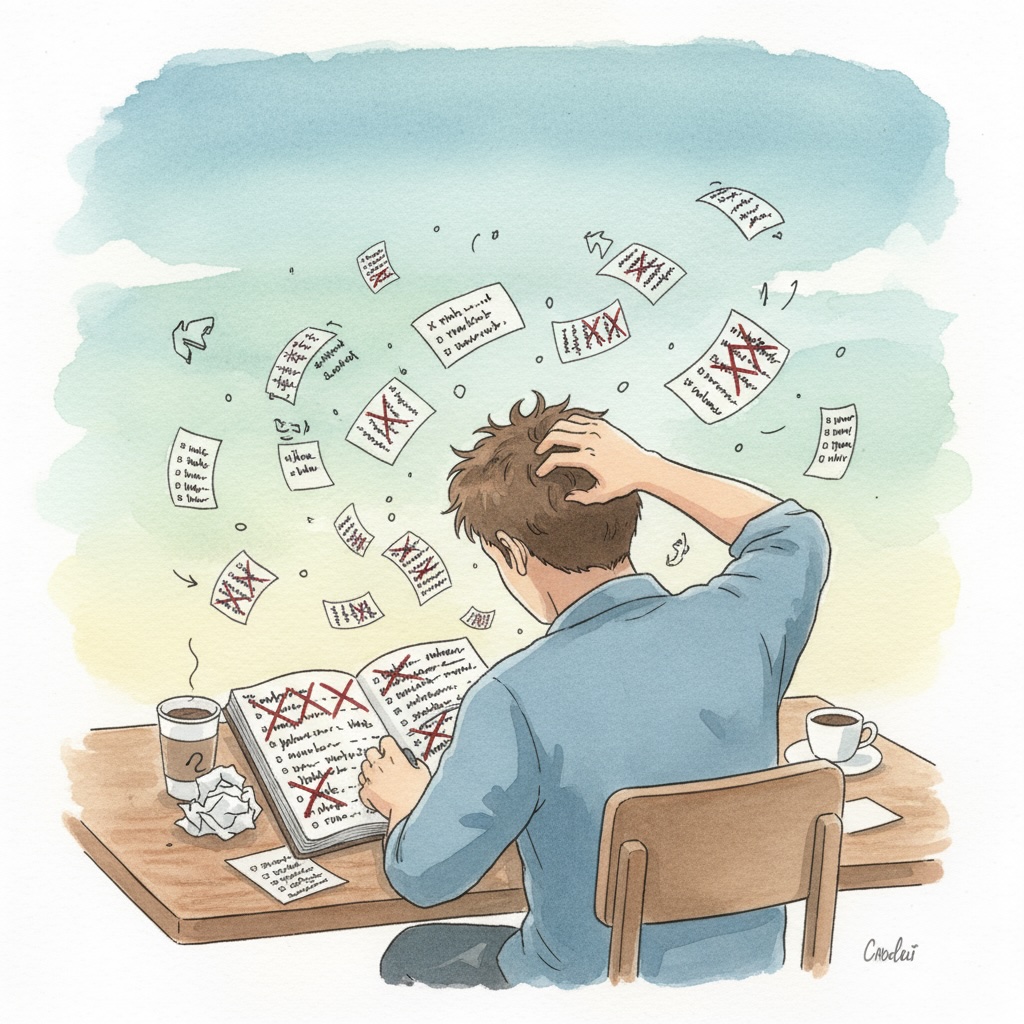
This is a scene that plays out constantly in modern workplaces—you've tried Notion, Trello, various time management apps, even read bestsellers like Getting Things Done and countless productivity books, yet you still feel perpetually busy, always chasing, never truly at ease.
British entrepreneur Charlotte Bordewey noted: "I've tried over ten task management tools, but my to-do list never seems complete. I keep trying to catch up, but I'm always falling behind." After years of studying productivity methods, she ultimately discovered that she hadn't become more productive—instead, she often got lost in planning and fine-tuning, spending enormous amounts of time optimizing her system rather than advancing important projects.
James Clear, author of the bestselling Atomic Habits, shared similar struggles: "If you spend too much time designing processes, you lose momentum in actually advancing your goals. Being busy doesn't equal being productive. I carefully organized all my tasks, but my actual results didn't necessarily improve."
Or consider Julie Zhuo, former Google design director, who candidly shared in a TED talk: "My most confusing moments came when my tasks were perfectly organized, yet I always felt like there was so much left undone. The real psychological pressure comes from being unable to focus on the few truly important goals that can create change."
These stories reveal a common phenomenon: we constantly pursue "efficiency," yet struggle to escape anxiety and powerlessness, as if we've tried every method but life hasn't become simpler or happier as a result.
It's Not You—The System Has Trapped You
From freelancers to team collaboration, many people find that digital tools actually make them more exhausted rather than more efficient.
It Started with a Simple Notebook
Jack is a freelancer who tried using the minimalist bullet journal method to maintain daily progress. He found that at the end of each month when migrating incomplete tasks, he always felt a sense of "I've failed again." The intention was to focus on priorities, but repeatedly incomplete tasks only created more psychological pressure. Those repeatedly unfinished tasks that Jack couldn't bear to delete reminded him every month: "I failed again." The trouble of writing didn't force productivity—it only made task management itself a new burden.
Tool Upgrades, Anxiety Upgrades
A few months later, Jack switched to the GTD system, implementing various tags, categories, and cloud sync tools. He thought more detailed organization would bring order, but found himself increasingly acting like a full-time "task maintenance engineer," spending weeks not on creative work but constantly patching system bugs. He was patching classification gaps from the previous week every week, feeling more like a to-do list engineer than a creative professional. Cal Newport also points out in Deep Work that modern distraction and anxiety often arise not from laziness, but from mental depletion caused by overly complex digital structures.
Diligent Repetition Ultimately Creates Information Silos
Jack's friend Eric was enthusiastic about various collaboration tools, building his own set of rules for each software, whether for project management or note archiving. But during actual team collaboration, important information was always scattered and uncontrollable. He bluntly described it: "I spent an afternoon wandering in a productivity maze, and ended up lost myself." This is actually a common dilemma for many teams. According to official Notion research, over 60% of users consider "inability to find information" their biggest pain point with digital tools.
We All Just Want to Focus on Getting Things Done
Jack and Eric's experiences aren't rare. From simple notes to elaborate systems to multi-tool combinations, countless knowledge workers are trapped in similar loops: tools meant to save you from chaos ultimately bind you with management, categorization, and synchronization. The key isn't that you're too lazy or procrastinate too much, nor is it lack of willpower—it's that these "productivity systems" have led everyone into a new trap.
The Psychology Behind the Busyness Trap
Why do seemingly efficient systems actually lead us into "busy work" and anxiety? Psychology and behavioral science have long revealed the underlying mechanisms, explaining why the more you manage, the more exhausted you become.
Principle One: Parkinson's Law—Work Expands to Fill Available Time
British historian Parkinson proposed in Parkinson's Law: "Work expands to fill the time available for its completion." This means that no matter how much effort you put into planning, any free time saved is quickly filled with new tasks and others' expectations. Many knowledge workers discover that after improving efficiency, work doesn't decrease—the "freed-up time" becomes a source of new tasks, creating an infinite loop of busyness.
Principle Two: Zeigarnik Effect—Incomplete Tasks Continuously Occupy Mental Space
Psychologist Bluma Zeigarnik discovered that unfinished tasks repeatedly surface in our minds, causing mental drain and invisible anxiety. Every to-do list item and unprocessed task is like a background program consuming your cognitive bandwidth, making true relaxation difficult. This phenomenon becomes more pronounced with management tools—the better you are at recording, the longer your list grows, and the heavier your stress becomes. Cal Newport describes it: "People aren't anxious because they're lazy, but because unfinished tasks keep chasing them, preventing focus on the present."
Principle Three: The Curse of Perfectionism—Wanting Complete Control Prevents Action
Many efficiency management enthusiasts have a habit of "doing things best," even pursuing perfect systems and plans. But this psychological demand often causes action paralysis, because they wait until everything is "perfect" before starting, or choose to procrastinate when encountering setbacks. Renowned therapist Brené Brown emphasized in a TED talk: "Perfectionism is not the pursuit of excellence—it's fear of failure." This fear of failure and intolerance for chaos actually causes many people to stagnate in planning, continuously organizing and reorganizing but never advancing toward goals.
The Key Difference: What Makes a System Truly Effective?
After countless cycles of "tool upgrades—maintenance burden—information maze," many people begin to realize that truly effective time management systems aren't more complex or rigorous, but rather enable you to continuously and happily progress toward your goals. The following key characteristics are fundamental indicators for distinguishing effective systems from busy-work traps:
1. Low Maintenance Cost—Not Bound by Tools
Effective systems function naturally within your daily workflow without requiring significant mental energy for maintenance, tagging, categorizing, or syncing. As efficiency author David Allen (GTD founder) said: "A good system should be seamless, allowing you to focus on completing work rather than constantly fixing the system itself."
2. High Fault Tolerance—Can Accommodate Chaos and Loss of Control
Truly good systems allow you to occasionally neglect or even lose control without collapsing. Even if you don't organize for a few days, you can easily get back on track without overwhelming guilt or reconstruction burden. Psychologist Adam Grant stated, "Continuous progress is more important than brief perfection; joyful forward momentum is what sustains."
3. Accessible Knowledge—Not Dependent on Single Organizational Logic
Information should be retrievable through multiple channels—search, browsing, connections—rather than relying solely on rigid classification structures. An efficient system doesn't require memorizing all levels and rules; you only need to know what's important and how to find it.
4. Goal-Oriented—Subtraction Thinking, Focusing on Few Key Tasks
The core value of effective systems isn't managing everything, but "helping you eliminate tasks and focus on the few truly important goals." Renowned management guru Peter Drucker pointed out: "Efficiency isn't completing everything, but selecting what's most important to you and moving forward consistently."
Rather Than Chasing an Empty List, Feel the Joy of Each Step Toward Your Goal
When we start thinking about "what makes a system effective," you'll discover: what truly sustains people and keeps them going isn't checking off every to-do item, but continuously feeling that you're moving toward your real goals. Even if progress is slow, even if your list always has incomplete items, you still have motivation in your heart—even some joy.
This Is the Core Experience Orlo Wants to Bring Users
We believe the most natural state of life and work isn't the pressure of "completing everything," but taking one more small step each day than yesterday, having clear direction without anxiety. Therefore, Orlo doesn't aim to make you a task maintenance expert, nor does it encourage exhausting yourself to "zero out" your list—instead, it returns attention to your goals, letting AI save you from trivial scheduling and helping you find the most meaningful next step forward amid chaos.
Even if things occasionally spiral or get messy, it's okay—as long as "progress" itself makes you feel comfortable and valuable, that's truly efficient living. Orlo's design makes this light, anxiety-free sense of progress the norm in your daily work and life.
Tags
Ready to optimize your time?
Transform these strategies into action with Orlo's AI-powered time management.
Get Started